“What is the difference between a large pizza and a bachelor of arts degree? Only one can feed a family of four”. HAHAHAHA HA, you are so funny Janet. “What did the BA graduate say to the BCom graduate? Do you want fries with that?” Hilarious. In all seriousness, these tasteless jokes need to stop, before we actually start believing in them.
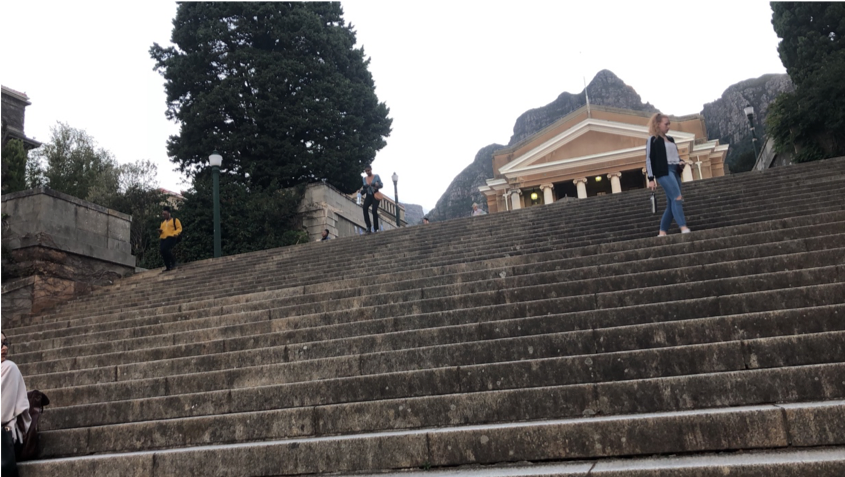
I recently joined my school friends for lunch and a catch up. The table consisted of engineering, business, accounting and medical students… and one BA student (yip that’s me). Amongst the high pitched and overwhelmingly loud ‘chit-chat’, the accounting student asked me about another friend who studies at TUKS. I informed her that she had failed first year. Another friend overhearing the conversation, burst into the spotlight and asked me what she was studying. When I replied, “a general BA”, everyone went silent, followed by outbursts of laughter and judgement. “How can she possibly fail a BA?”, “How dumb do you have to be to fail something so easy? It’s not even a real degree”, and “well it wasn’t going to get her any money anyway. She should have just found a rich husband from the start”. These were only a handful of disparaging comments among the many made.
They kept the judgemental conversation going for at least 20 minutes. Listening to their private school mentality, I managed to nudge in and ask everyone if they were all enjoying their degrees. Responses such as “no I hate every minute of it, I’m only doing it because it will pay the bills”, “it’s not interesting in the slightest, but my dad said that I need to get a worthwhile degree behind my name”, and “I don’t know what I want to do, so I’m just doing it for the guaranteed high paying salary”. I then told them that I had changed to a BA, majoring in film and gender studies, and that I loved every bit of it, and embraced every day filled with excitement and eagerness. As you can imagine, the subject changed very quickly.
High Schools place so much emphasis on attaining a university degree, prioritising the conventional professions such as law, commerce, medicine etc. Many, including myself, do not fit into the prioritised degree list. The stigma around a BA degree has been well established as the ‘Bugger-All’ degree, or at least that’s what my dad calls it.
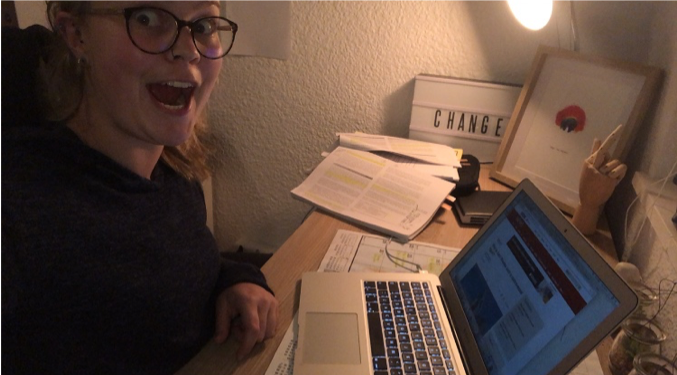
The typical question, “what can you do with your degree?” is attached to the common attitude that stems from the outdated fashion of thinking that whatever you study is what you’ll have a career in. In saying this, the frequent belief that ‘money is the key to happiness’, is essentially what motivates peoples in choosing a career path, which inevitably influences the majority of people’s choice of degree. Yes, money is important, but why study a degree for three plus years that you hate or lack any interest or passion in, when realistically speaking, it does not guarantee any form of job security or a high salary? Just because daddy (you know those “you’re doing great sweetie” type of ones) said that by studying accounting you’ll be a very rich and successful CEO of your own company one day, means absolutely nothing in the grander scheme of reality. Money should never be the only factor in choosing a degree. Heck, I have no idea how I’m going to make money one day but what I do know is that I am extremely happy right now in my degree, and that my passions have never shined so bright.
Trust me, studying a BA does not consist of a bunch of hippies smoking weed and singing Kumbaya in between lectures. The general perception believes that it is an ‘easy’ or ‘soft’ degree which very few ‘smart’ students opt for. The education/schooling system has been brainwashed with a hierarchy of subjects: science and maths at the top; drama and arts at the bottom. Many people might deny this belief, but honey, the proof is in the pudding. Maths is a compulsory subject, whilst the arts and drama are electives. This mind set has definitely leaked into varsity with the kind of degrees that we all end up pursuing. This has resulted in ranking the types of degrees based on a hierarchy of value and superiority.
A BA is not easier than other degrees, it requires hours of reading, research and essay writing (trust me, you can ask the bags under my eyes and my social life about it). A BA allows individuals to grow and deepen their understandings of our complex world, which encourages critical thinking and active engagement in debates and conversations. I have been exposed to multiple viewpoints, which has enabled me to generate purposeful and meaningful contributions to understanding, which exhibits the underlying entanglement and tensions of reality. Communication and interpersonal skills, critical thinking and creativity, formulating and justifying arguments and opinions, and the abilities to understand human conditions are just a few out of the many skills that I have learnt thus far, skills that are profoundly relevant in todays’ world.
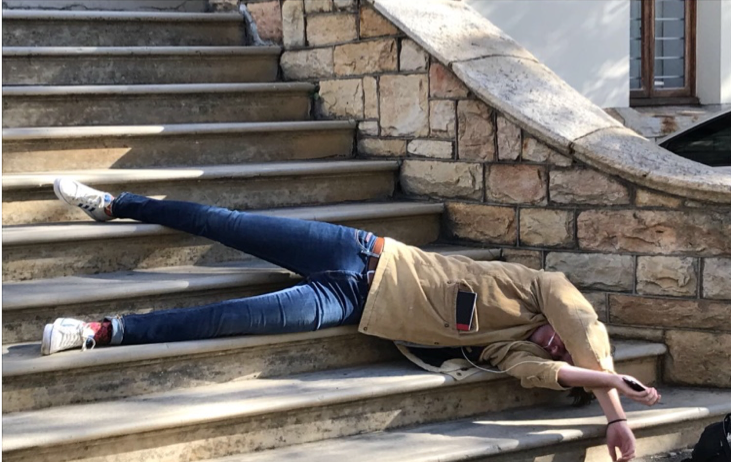
In South Africa, an estimate of only 15% of students in an undergraduate degree actually graduate. Furthermore, among the 85% dropouts, 50-60% are known to have dropped out in their first year of studies. Other than financial reasons, it can be said that students lack of passion and commitment is a vital factor in them dropping out. Pressures from parents, schools and society sway individuals to pursue a ‘real degree’ which ultimately sets them up to fail or dropout if they lack interest, passion or commitment in the coursework. I have met multiple students who have changed from “real degrees” to a BA, having crumbled under the demands of something that didn’t spike their interest.

David, a tutorial friend of mine, is a Bsocsci student majoring in environmental geographical sciences, film and media, and sociology at UCT. David first started studying construction engineering and dropped out when he realised that it was disregarding his passions. He then studied sound engineering but realised that job prospects were slim. This then brought him to study a humanities degree at UCT. I asked David why he chose engineering, he expressed,
“In high school I was definitely pushed to pursue a degree that is anything other than an arts degree. Even though art was my strongest subject in high school, I felt pressure to pursue engineering as it aided a projection of the person I thought I needed to be rather than what I wanted to be”.
David’s journey is only one of the many students who fall victim to the promotion of ‘real degrees’ by school, family and society. I asked David how he feels now about pursuing his new and different degree, he replied,
“Initially I was sceptical as I bought into the stigma that humanities are for less academic people. I have since found it to be the most fulfilling decision I have ever made”.
I asked David what he has learnt thus far and why his degree change was such a vital key in finding happiness in his education, he replied,
“It has pushed me to grow and re-evaluate my own views and opinions. I have learnt far more about myself and who I want to be rather than what others think of me. The sense of freedom has been the biggest advantage, knowing that I can change or drop a subject that isn’t working for me”.
David’s journey is a perfect example of how constructed stigmas around a BA degree can motivate individuals to follow the normative ‘real degrees’ and ignore their true passions that can be found in other degrees that are seen as insignificant.
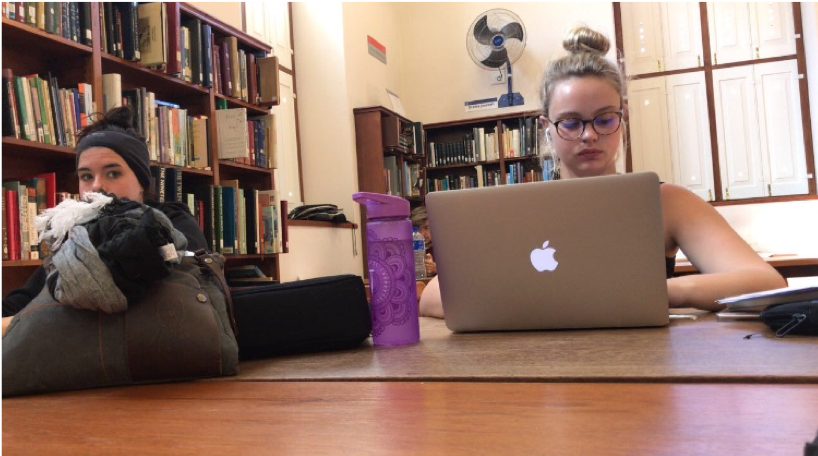
A recent article by the Sunday Times has stipulated that the National Skills Fund is wasting billions on funding humanities students, and that, “Universities… are churning out so many students with soft degrees that the market cannot absorb them”. It is this type of stuck-in-the-year-1975 mentality that continues to support, grow and encourage the ‘Bugger-All’ stigma around a BA. The work force is constantly hungry for new, creative ideas and interpersonal skills, which is exactly what one learns in a BA. For example, Oprah Winfrey, graduated with a bachelor of arts in communication. Former CEO of Disney, Michael Eisner, graduated with a BA in English literature and theatre, and did not take any business subjects. He expresses that “literature is unbelievably helpful, because no matter what business you are in, you are dealing with interpersonal relationships”. Ultimately, a degree is only useless, if you allow it.
I know that my BA does not have a job lined up for me after graduation, but neither does any other degree. The qualification status on your certificate does not determine who you are as a person. I do not care if my degree is sitting at the bottom of the hierarchy of importance. I know that I am on the path to my own success and self-fulfilment, and I will always respect and place my passions before any job that wishes to disregard them.

