Pressure, time constraints and stress are very real to all students. Just as we are to manage our studies, daily living and path to success, we are responsible for managing our own mental health.

Exercise
Besides the numerous physical benefits of exercise, it also has a profound effect on your mental health. Exercise is paramount in releasing stress and feel good endorphins improving mood and decreasing feelings of depression and anxiety. It increases energy levels, improves memory and learning, promotes quality sleep and enhances relaxation. As you can see all these benefits are particularly relevant to a student. It doesn’t matter what the exercise is or the level of intensity, all types of exercise have the same benefits. Work out an exercise plan/activities that interest you.
Even 30-45 minutes at the gym will do a world of difference. The toughest part for me is actually getting my ass to the gym, thinking of every excuse to talk myself out of it. So once you get over that first initial step, girl trust me, you’ll be feeling and looking like yourself again!

Meditation
Take time to meditate everyday. It only takes 5 to 10 minutes and is a brilliant way to start the day in a good head space. Besides allowing the mind to still and reflect, meditation provides the following benefits:
- Reduces stress
- Increases your sense of well being
- Increases your sense of connectedness and empathy
- Improves focus
- Improves relationships
- Improves creativity
- Improves memory
- Improves ability to make decisions
- Helps overcome addiction
- Improves cardiovascular health
- Enhances immune system
- Helps you find flow
- Reduces physical and emotional pain
- Take you towards enlightenment

Yoga
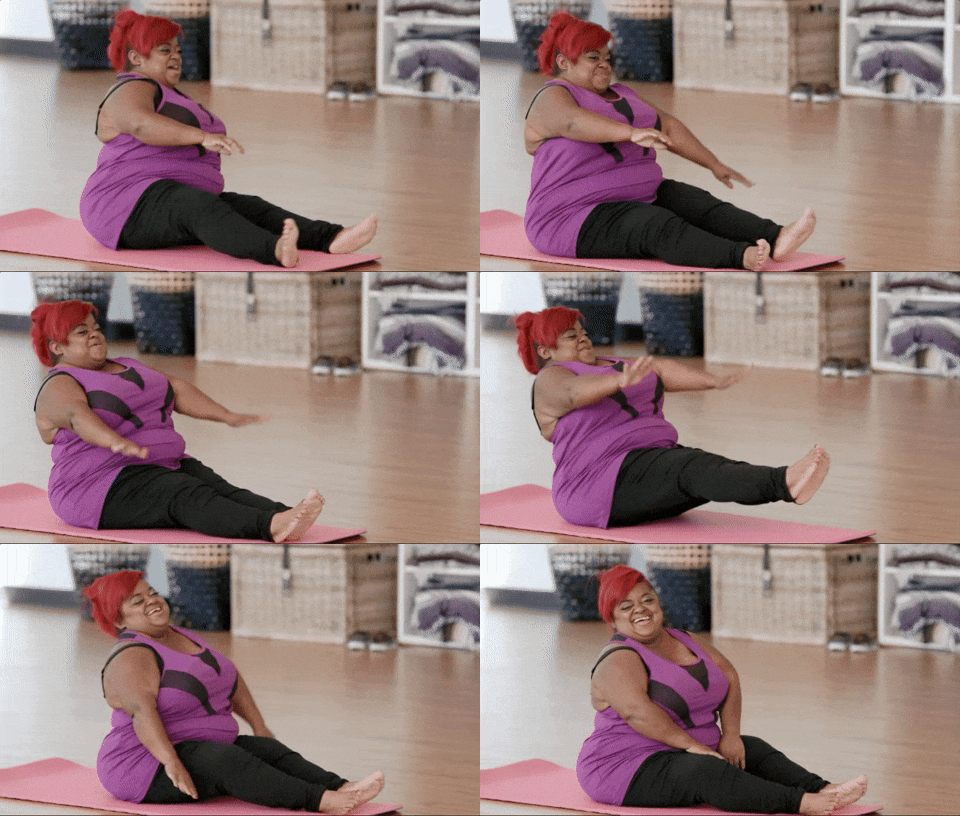
It is proven that yoga reduces stress, anxiety and depression and promotes quality sleep. Find a class close to you and try and attend at least one class a week. It is also a great way to meet new people. Yoga makes you physically strong and well balanced in your physical and energy body. If you have not done yoga before, I urge you to take the plunge, you will be blown away by the way you feel after a class, grounded, calm and content. There are different types of yoga. Hatha yoga is recommended if you are new to yoga, it is slower paced than other yoga styles and is a classic approach to breathing and movement exercises. Other types are Bikram, Vinyasa, Ashtanga, Kundalini and Lyengar yoga. Yin and Restorative yoga are a calmer and slower practice where postures are held for longer. They are a meditative practice that help you find inner peace.
Sleep
Sleep plays a crucial role in thinking and learning. Lack of sleep hurts these cognitive processes in many ways. It impairs attention, alertness, concentration, reasoning and problem solving. This makes it more difficult to learn efficiently. If you don’t get enough sleep you will not remember what you learnt the day before. So cramming work in at the last minute and working through the night before a test or due assignment is not ever going to help you. Plan your work timetable according to scheduled assignments and tests, making sure you get at least 7 to 8 hours of sleep a night. It’s real people!!
Here are ways to improve your sleep quality:
- Reduce blue light exposure in the evening (technology)
- Increase bright light in the morning (don’t have heavy dark curtains)
- Don’t consume caffeine late in the day or evening
- Reduce long naps in the day
- Try sleep and wake at consistent times
- Don’t drink alcohol (tough one but be diligent for a few nights before a test)
- Be mindful of comfortable bedroom temperature
- Optimise your bedroom environment
- Don’t eat late in the evening
- Relax and clear your mind in the evening
- Comfortable mattress, pillow and mattress
- Exercise

Breathing
Breathing is the first line treatment for depression, anxiety, insomnia and burnout. Conscious breathing is the first step to taking conscious responsibility. Most of us take breathing for granted, and yet when we breathe consciously, we are able to build resilience into our systems. It is the easiest self care ritual.
Some simple breathing practices:
Coherent breathing: Inhale slowly for 5 seconds through the nose, and exhale slowly for 5 seconds through the nose or mouth, with no pauses between the breaths. Do this for 5 minutes at a time every morning.
Breathing for calm and anxiety: Breathe in full for a count of 5. Hold the breath for a count of 5; exhale slowly for a count of 10. Do this before going to bed at night or when you’re feeling anxious.

Organisation
Be organised, structure a manageable routine and focus on a more balanced schedule that does not put too much pressure on you. Give yourself more brakes during the day.
Make the space around you organised and tidy. Have a system of filing and storage etc. Know where to find everything at all times (and that means putting back in the same place every time). This saves time, frustration and helps you to work and think clearly.
Single task
Don’t multi task. Multi tasking is often confused with a capacity to adapt to our fast paced and digitally dominated society. Better performers are associated with the ability to focus and be attentive to a task, doing one thing at a time. Something to seriously think about !!
Dealing with being overwhelmed
Setting goals, organising your time and space around you, planning and single tasking will allow you to prioritise and focus on tasks that need to be done alleviating the feeling of being overwhelmed.

Don’t ignore problems
Should things get the better of you, be mindful of where or why you might be struggling to cope. Ask for help, it is not a sign of weakness but shows courage, maturity and responsibility. Use the resources and help offered on the campus, speak to a friend, tutor, mentor or family member. It can be tempting to isolate yourself during times of extreme stress but choose to reach out as soon as possible. There is always help and there are always solutions.
 Putting Life Back into the Student